
SYSTEMIC PERSONNEL DEVELOPMENT
Supporting individuals and organizations on their journey toward greater effectiveness in a rapidly changing work environment
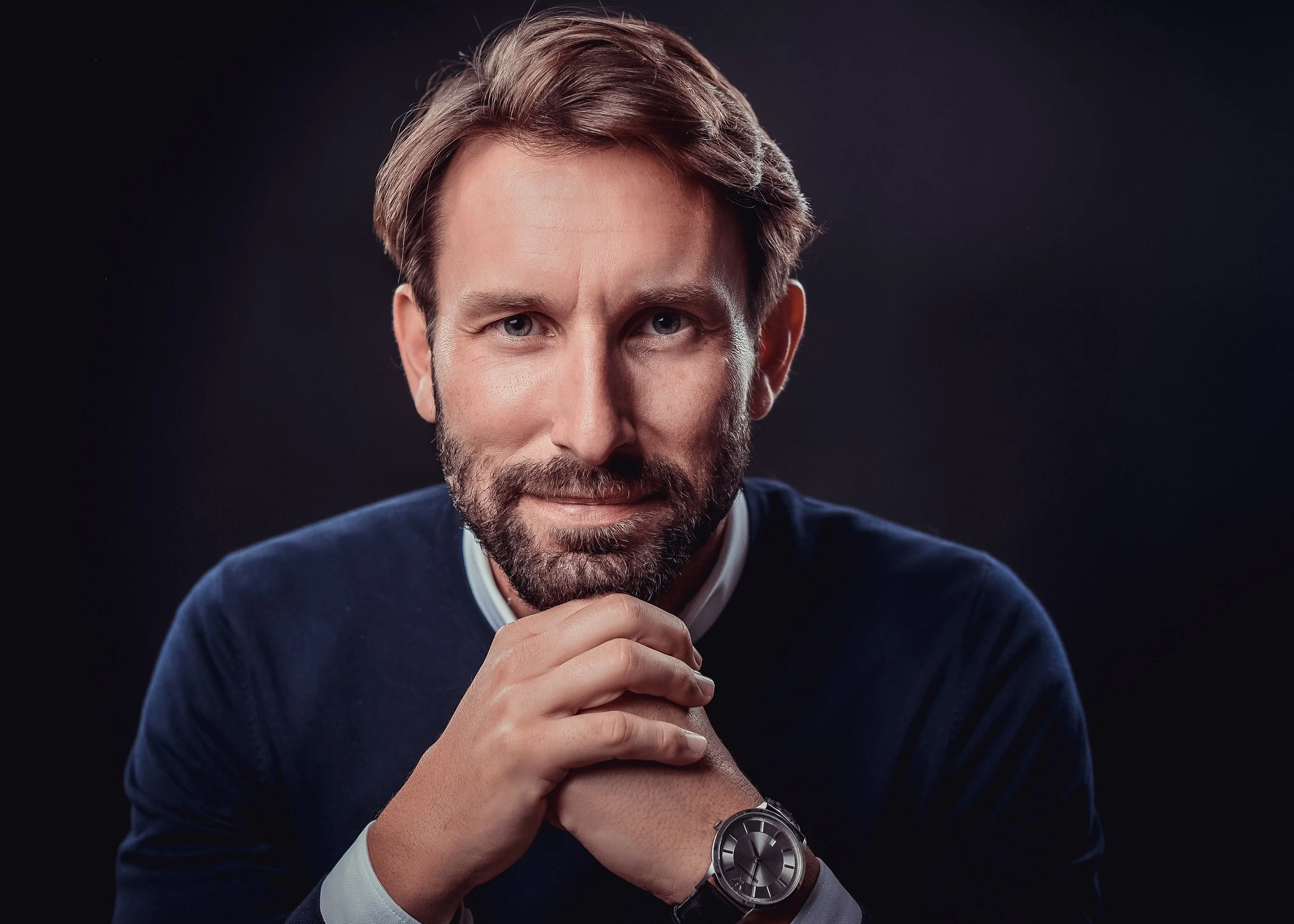
Tobias Bremer
Systemic Consultant & Trainer
I work with individuals and organizations in situations where previous approaches have reached their limits—and new clarity is needed.
How I Work
Complex situations in companies rarely have a single cause.
What are the actual requirements—individually, within the team, and within the organization? What social dynamics are at play? What keeps certain (ineffective) patterns going?
My training programs, consulting engagements, and personalized coaching are all based on this foundation.
My conceptual framework: systems theory for analyzing social systems and transactional analysis for the individual level. Together, these approaches provide depth and open up new avenues for action.
I work both nationally and internationally, in German and English, and offer services both online and in person.
Training Programs
Leadership can be learned—not in the traditional sense of a seminar, but through a conscious examination of one’s own role and the system in which one leads.
My training programs combine direct knowledge transfer with practical application to the participants’ real-life situations.
-
Leaders often realize that what has made them successful in the past is no longer sufficient. While the role has evolved, their personal leadership style often has not.
This training program addresses precisely this issue: It focuses on consciously examining your own role:
What has worked so far? What no longer fits? How do you want to understand and shape your role in the future?The Training “Leading Myself” combines systemic perspectives with transactional analysis to shed light on both the context and the inner logic of one’s own behavior and decisions.
In our training, we focus on areas such as:
Role clarification: current versus future roles
Developing a clear professional identity and approach
Reflecting on your own patterns using Transactional Analysis
The goal is to gain clarity and confidence in one’s own role—and to remain effective in the face of changing demands.
If you’d like to help your managers redefine and consciously shape their roles, or if you’re interested in this training yourself, let’s talk.
-
Today, leadership primarily means understanding and shaping dynamics. Teams are not linear systems; they develop their own patterns, tensions, and conflicts, and these are where their greatest potential lies.
Many challenges arise from the interaction of people, expectations, and context.
The “Leading Others” training course focuses on leadership within an organizational context. You will learn to better understand team dynamics and exert targeted influence without overstepping your bounds.
In our training, we focus on areas such as:
A systemic perspective on teams and social systems
Understanding team dynamics and developmental phases
Communication and behavior based on Transactional Analysis
This leads to greater confidence in dealing with complex situations—and a clear understanding of what really works within the system.
If you’d like to help your leaders manage teams more thoughtfully and shape team dynamics effectively—or if you’re interested in this training yourself—let’s talk.
Consulting
Human resource development is effective when it is not viewed as a standalone measure, but rather as part of a clear framework: What does the organization need, and what do the people within it need?
I help HR and leadership teams design employee development programs that make a real difference in day-to-day operations—both strategically and operationally.
-
Why do you develop your employees – and how does this benefit your company?
Strategic personnel development means understanding development not as a standalone measure, but as the interplay of key action areas:
Ensuring Strategic Alignment & Future Readiness
Personnel development is consistently aligned with corporate objectives – with a clear focus on future competency needs and role requirements.
Developing Competencies Strategically
Technical, methodological, and personal skills are systematically developed – not only through training, but primarily in daily work.
Designing Effective Leadership
Leaders are strengthened in their role – as key drivers for development, collaboration, and culture.
Recognizing and Developing Potential
We identify and nurture talent, providing clear development pathways tailored to diverse target groups.
Developing Organization and Collaboration
Development extends beyond the individual; we actively shape structures, roles, and cross-departmental collaboration.
Integrating Performance, Feedback, and Learning
By fostering a culture of feedback and reflection, we ensure that development is effective in daily operations, rather than being confined to the training room.
Key areas of focus include:
Aligning personnel development with corporate goals and strategy
Establishing clear development pathways for diverse target groups
Integrating departments, locations, and role requirements
Defining roles, responsibilities, and processes within personnel development
Building a consistent development framework rather than isolated initiatives
Our consulting aims to design personnel development that is not merely well-intentioned, but genuinely effective in daily operations – benefiting leaders, employees, and the organization as a whole.
If you’d like to give your talent development a clearer direction, let’s talk.
-
This focuses on practical, day-to-day implementation: How is personnel development truly integrated into daily operations?
Key areas of focus include:
Designing and enhancing the quality of performance and development reviews
Ensuring accessible and clearly structured access to development opportunities
Embedding development within daily leadership practices
Managing diverse performance and development levels
Ensuring transparency, comprehensibility, and practical applicability
Our consulting aims to design personnel development that is not merely well-intentioned, but genuinely effective in daily operations – benefiting leaders, employees, and the organization as a whole.
If you want to effectively implement your talent development strategy, let’s talk.
Guidance
Some challenges don’t require a workshop or a program. They require space—for the specific situation, the specific person, or the specific team.
Personalized support, conflict resolution, and team coaching during challenging times: direct, confidential, and solution-oriented.
-
Not all challenges can be resolved through training or structured programs. Complex or personal situations often require dedicated space for individual clarification.
Through individualized guidance, I work confidentially and with focused attention with leaders and key personnel on specific, real-world challenges directly related to their roles.
Typical topics include:
Clarifying one's own role and position in challenging situations
Managing uncertainty, pressure, or conflicting expectations
Reflecting on decision-making and behavioral patterns (Transactional Analysis)
The goal is to create clarity, expand options for action, and regain effectiveness in challenging situations.
If you are seeking individual support in challenging situations, please contact us.
-
Conflicts are inevitable in organizations; the crucial factor is how they are managed. If left unresolved, they consume energy, impede collaboration, and often have repercussions far beyond the individuals involved.
Conflict guidance is not about forcing quick solutions, but rather about making underlying dynamics visible and manageable.
Key areas of focus include:
Analyzing conflict dynamics at a systemic level
Clarifying the interests, roles, and expectations of all parties involved
Working with communication patterns
This lays the groundwork for sustainable solutions – and often for a lasting improvement in collaboration.
If you wish not only to resolve conflicts, but to truly understand and clarify them, please contact us.
-
Teams frequently enter phases of increased complexity: changes, critical projects, or persistent tensions pose particular challenges for collaboration and leadership.
In these situations, the focus is less on isolated measures and more on understanding and strategically shaping the entire system.
Key areas of focus include:
Assessing team dynamics and developmental phases
Managing tensions, uncertainties, and differing expectations
Strengthening collaboration and shared alignment
I guide teams and their leaders to gain clarity, stabilize dynamics, and regain their capacity for effective action.
If you wish to provide targeted support to teams during challenging phases, please contact us.

“The focused guidance provided by tb consultancy has consistently helped us identify and realize our potential—both commercially and in terms of collaboration.”
Kai Bertrand
Managing Director
‘Gemeinsam Jung GmbH’, Hamburg